Source 7 ply birch plywood for furniture, flooring, and cabinetry
Explore 30 listings of 7 ply birch plywood suitable for furniture, flooring, and cabinetry. Buyers can compare specifications like thickness, bonding strength, and glue types to find the right material for their projects.
Key considerations
Products List




Comprehensive Sourcing Guide
Strategic Sourcing Guide for 7-Ply Birch Plywood Procurement
Understanding the Technical Architecture of 7-Ply Birch Construction
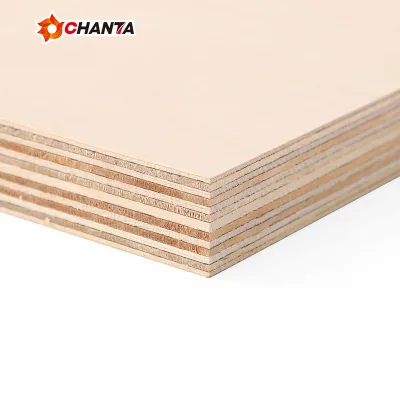
When evaluating 7-ply birch plywood for industrial or commercial applications, the buyer must first understand the specific structural composition that defines this material class. The "7-ply" designation indicates a layered construction consisting of seven distinct sheets of veneer bonded together. This specific layer count is often chosen to balance structural rigidity with weight efficiency, making it a preferred choice for applications requiring high strength-to-weight ratios. The core material composition is a critical variable; while the surface veneers are typically birch, the inner plies may utilize a combination of poplar, hardwood, birch, pine, or composite materials. This core configuration directly influences the panel's density, which in the observed market data ranges between 680kg/M3 and 720kg/M3.
The physical dimensions of the product are standardized yet customizable. The most common specification observed is 1220mm by 2440mm, with thicknesses varying based on the specific ply configuration. For 7-ply variants, thicknesses such as 12mm are frequently cited, though the broader market offers a range from 3mm to 30mm. The grain pattern is another defining characteristic; while straight grain is common for aesthetic consistency, irregular grain patterns are also available depending on the source veneer. The moisture content is a vital technical parameter, typically maintained between 5% and 14% to ensure dimensional stability and prevent warping during storage or installation. Buyers should verify that the specific batch they procure falls within this moisture range, as deviations can lead to significant performance issues in humid or dry environments.
Compliance Standards and Formaldehyde Emission Verification
In the global timber trade, compliance with environmental and safety standards is non-negotiable. The formaldehyde emission levels of 7-ply birch plywood are a primary concern for indoor applications. The supplied data indicates that products may meet "EGrade: Grade One" or "EGrade: Excellent Grade" standards. These designations suggest varying levels of formaldehyde release, with "Excellent Grade" implying the lowest permissible emission levels suitable for sensitive environments such as schools, hospitals, or residential interiors. However, buyers must not assume that all listed products automatically meet these specific grades without verification. The standard "E0" and "E1" glue classifications are also mentioned in the context of adhesive types, which are the primary drivers of emission levels.
The adhesive systems used in bonding the seven plies are equally critical. The data references specific glue types including "Mr," "Carb P2," "Phenolic WBP," and standard E0/E1 formulations. Carb P2 (Carb Phase 2) is a specific standard often associated with low-emission adhesives, while Phenolic WBP (Weather and Boil Proof) indicates a resin capable of withstanding harsh environmental conditions, suitable for outdoor use. When sourcing, procurement teams must explicitly request the Certificate of Analysis (CoA) or test reports that confirm the formaldehyde emission levels match the claimed "Excellent" or "Grade One" status. Relying solely on the product name without verifying the specific glue type and corresponding emission test results can lead to non-compliance with local building codes and indoor air quality regulations.
Cost Drivers and Pricing Dynamics in the Birch Market
The pricing of 7-ply birch plywood is influenced by a complex interplay of material costs, processing requirements, and market volatility. The observed price range in the market spans from $2 to $150 USD, a significant variance that reflects differences in thickness, veneer quality, and adhesive technology. Thinner panels or those with lower-grade core materials will naturally fall at the lower end of this spectrum, while thicker, high-grade panels with premium phenolic adhesives will command higher prices. The minimum order quantity (MOQ) also plays a role in the effective unit cost, with observed ranges from 1 to 1000 units. Buyers purchasing in bulk can often negotiate better rates, but the MOQ flexibility varies by supplier.
Material sourcing is a primary cost driver. Birch veneer is generally more expensive than poplar or pine due to its superior hardness and aesthetic appeal. The core composition further affects pricing; a core made entirely of birch will cost more than a composite core using poplar or mixed hardwoods. Additionally, the surface treatment process adds value. While some products offer a "Honed" surface, others may require custom finishing. The "Can Be Done as Your Requirement" attribute suggests that customization is a standard service, but it invariably adds to the production time and cost. Buyers should factor in the cost of "Standard Export Package" or "Plywood Pellet and Case" shipping solutions, as specialized packaging for fragile birch veneers can impact the landed cost.
Typical Applications and Performance Expectations
The versatility of 7-ply birch plywood allows it to serve a wide array of applications, from furniture manufacturing to structural flooring. The data explicitly lists "Furniture" as a primary application, where the smooth surface and straight grain of birch provide an ideal canvas for finishing. The "Invisible Floor Base" feature noted in the specifications suggests a specific use case in flooring systems where the plywood serves as a subfloor that remains hidden after the final finish is applied. This application requires high bonding strength and dimensional stability, which the 7-ply construction aims to deliver.
Usage scenarios are categorized as "Indoor" or "Outdoor," depending on the adhesive system employed. Panels bonded with Phenolic WBP glue are suitable for outdoor environments due to their resistance to moisture and weathering, whereas those with standard interior glues are restricted to indoor use. The bonding strength ratings, such as "I(NQF)" or "Ⅱ(Ns)," indicate the mechanical performance under stress. For furniture and cabinetry, high bonding strength is essential to prevent delamination under load. The "Two Times Hot Press" process mentioned in the data suggests a manufacturing method designed to enhance this bonding strength, ensuring the seven layers remain firmly attached under various stress conditions. Buyers must match the application requirements with the specific bonding strength and glue type to ensure long-term durability.
Supplier Evaluation and Quality Control Protocols
Selecting a reliable supplier for 7-ply birch plywood requires a rigorous evaluation process that goes beyond price comparison. The origin of the product is consistently listed as "China," which is a major global hub for plywood manufacturing. However, the specific factory capabilities vary significantly. Buyers should prioritize suppliers who offer "Customization" services, as this indicates a flexible production line capable of meeting specific thickness, size, or veneer requirements. The "prod_standard: as your request" and "Can be custom made" attributes highlight the importance of verifying a supplier's ability to adhere to custom specifications rather than relying solely on off-the-shelf inventory.
Quality control should be a central component of the procurement strategy. The "Moisture Content" and "Density" ranges provided in the data serve as baseline metrics for acceptance. A robust quality control protocol involves requesting third-party test results for moisture content, formaldehyde emissions, and bonding strength before shipment. The "Standard Export Package" and "Wooden Pallet" or "Pallets" options indicate that packaging is a critical factor in preventing damage during transit. Buyers should verify that the packaging is sufficient to protect the delicate birch veneer from impact and moisture exposure. Additionally, the "Surface: Can Be Done as Your Requirement" attribute necessitates a clear visual inspection process to ensure the surface finish meets the agreed-upon aesthetic and functional standards.
Long-Term Procurement Considerations and Supply Chain Resilience
Sourcing 7-ply birch plywood is not merely a transactional event but a strategic decision that impacts long-term project success. The "prod_packing" and "prod_model" variations suggest a need for consistent inventory management. For projects requiring large quantities, establishing a relationship with a supplier who can maintain consistent quality across multiple batches is essential. The "1220244015mm" and "1220244018mm" specifications indicate that standard sizes are available, but the "12202440, 12502500 as your request" flexibility allows for adaptation to specific project needs.
Lead times and production capacity are critical factors in supply chain resilience. While specific lead times are not provided in the data, the "Can be custom made" nature of the product implies that production schedules may vary based on order complexity. Buyers should plan for potential delays, especially when customizing veneer types or thicknesses. The "Two Times Hot Press" process, while beneficial for quality, may extend production time compared to single-press methods. Furthermore, the "E0, E1" and "Phenolic WBP" glue options require different curing times and quality checks, which can affect the overall timeline.
To mitigate risks, buyers should consider diversifying their supplier base and maintaining a buffer stock of critical materials. The "Core: Poplar, Hardwood, Birch, Pine, Combi" variability means that supply chain disruptions in one material type (e.g., birch) could impact production if the supplier relies on a single source. A resilient procurement strategy involves understanding the supplier's raw material sourcing capabilities and ensuring they have alternative core options available. By focusing on technical specifications, compliance verification, and supplier flexibility, buyers can secure a reliable supply of 7-ply birch plywood that meets the demanding requirements of modern construction and manufacturing.
Comparative Analysis of Plywood Specifications
| Feature | Standard 7-Ply Birch | High-Grade Custom | Outdoor Variant |
|---|---|---|---|
| Core Material | Poplar, Hardwood, Birch, Pine, Combi | Custom Core Request | Phenolic WBP Bonded |
| Thickness | 12mm (Common) | 3-30mm Range | 15mm, 18mm |
| Dimensions | 1220*2440mm | Custom (e.g., 1250*2500) | 1220*2440mm |
| Adhesive | Carb P2, Mr | E0, E1, Phenolic WBP | Phenolic WBP |
| Emission Grade | Grade One / Excellent | Verified Test Report | Weather Resistant |
| Usage | Indoor, Furniture | Custom Application | Outdoor |
| Packaging | Standard Export / Pallet | Plywood Pellet & Case | Wooden Pallet |
This table summarizes the key differentiators observed in the market data. It highlights that while standard 7-ply birch plywood is widely available for indoor furniture use, high-grade and outdoor variants require specific attention to adhesive types and core compositions. The flexibility in thickness and dimensions allows for tailored solutions, but buyers must clearly define their requirements to ensure the supplier can deliver the correct specification. The variation in packaging also underscores the need for careful logistics planning to protect the product integrity during transit.
FAQs
What formaldehyde emission standards does 7 ply birch plywood meet?
Products may meet EGrade: Grade One or Excellent Grade standards for formaldehyde emissions. Buyers must verify specific glue types like Carb P2 or E0 to confirm the exact emission level before purchase.
Which glue types are used for 7 ply birch plywood bonding?
Common adhesives include Mr, Carb P2, Phenolic WBP, and standard E0 or E1 formulations. Phenolic WBP is suitable for outdoor use, while others are typically used for indoor applications.
How thick is the standard 7 ply birch plywood available?
Standard thicknesses include 12mm, 15mm, and 18mm for common sizes like 1220*2440mm. The broader market offers a range from 3mm to 30mm depending on customization requests.
Can 7 ply birch plywood be customized for specific dimensions?
Yes, customization is available for dimensions such as 1250*2500mm or specific thicknesses. Suppliers can also adjust veneer types and surface treatments to meet unique project requirements.
What is the typical density range for 7 ply birch plywood?
The density typically ranges between 680kg/M3 and 720kg/M3. This density is influenced by the core material composition, which may include poplar, hardwood, birch, pine, or composite materials.
Which packaging options are standard for 7 ply birch plywood?
Standard packaging includes Standard Export Package, Plywood Pellet and Case, or Wooden Pallets. Buyers should verify packaging details to ensure protection during transit and storage.